What is Self Confidence?
Self Confidence is belief in one’s ability to engage or deal successfully/ adequately with the tasks and goals. It is usually the result of overcoming obstacles or working on building/ gaining expertise on a skill.
A self-confident person is ready
- to rise to new challenges
- seize opportunities
- deal with difficult situations
- and take responsibility if and when things go wrong
Just as self-confidence leads to successful experience, more successful experiences leads to self-confidence. Although any successful experience contributes to our overall confidence, it is, of course, possible to be highly confident in one area, such as cooking or dancing, but very insecure in another, such as mathematics or public speaking.
In the absence of confidence, courage takes over. Confidence operates when the activity or experience is known. Courage is utilised in that of the unknown, the uncertain, and the fearsome. A person cannot be confident in diving from a height of 10 meters unless he/ she once had the courage to dive from a height of 10 meters.
Difference between Self Esteem and Self Confidence
Self Confidence is our view on our own abilities to do something while Self Esteem is our perception of ourselves. The level of self-esteem is a result of social norms and what we believe ourselves to be. People who have high levels of self-esteem are comfortable with themselves. Self-confidence and self-esteem do not always go hand in hand. In particular, it is possible to be highly self-confident and yet to have profoundly low self-esteem, as is the case, for example, with many performers and celebrities, who can perform before an audience of thousands but then damage themselves with drugs which is a sign of low self-esteem.
What value does Self Confidence have in an individual’s life?
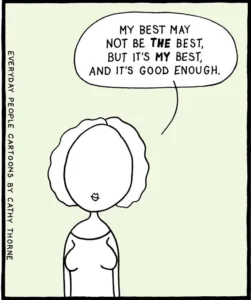
Self confidence brings in greater strength and less feelings of weakness and defeat when facing challenges. This freedom from self doubt, fear, and anxiety naturally translates into greater peace of mind and a more stress-free life. Self confidence also builds courage. Once we have succeeded in a acquiring or gaining expertise in a new skill we become more courageous to try other skills.
Confidence leads to more beneficial and enjoyable interactions with others. The happier and more confident you are, the more relaxed, comfortable, and at ease you are, and this naturally puts others at ease more around you; also, with these qualities, others tend to trust, respect, value, welcome, and cooperate with you more; the overall result is better and more enjoyable social interactions.
As per Maslow’s Hierarchy of Needs Self Esteem and Confidence needs like achievement, independence, mastery, responsibility, status, dominance once fulfilled lead to the fulfillment of higher order needs like
- Cognitive needs like knowledge, meaning, self awareness etc
- Aesthetic needs like appreciation and search for beauty, balance in life etc
- Self Actualization needs like realising personal potential, self-fulfillment, seeking personal growth and peak experiences
- Transcendence needs – helping others to achieve self actualization
How does Self Confidence develop?
How does self-confidence develop? These beliefs begin to form in early childhood as children deal with a wide variety of experiences, tasks, and situations. However, the growth of self-confidence does not end during childhood but continues to evolve throughout life as people acquire new skills, experiences, and understanding.
According to Bandura (Albert Bandura, 1977; Self Efficacy – Towards a unifying theory of behavior change), there are four major sources of self-efficacy (which means positive Self confidence):
- Mastery Experiences
“The most effective way of developing a strong sense of efficacy is through mastery experiences,” Bandura explained. Performing a task successfully strengthens our sense of self-efficacy. However, failing to adequately deal with a task or challenge can undermine and weaken self-efficacy.
- Social Modeling
Witnessing other people successfully completing a task is another important source of self-efficacy. According to Bandura, “Seeing people similar to oneself succeed by sustained effort raises observers’ beliefs that they too possess the capabilities to master comparable activities to succeed.”
- Social Persuasion
Bandura also asserted that people could be persuaded to believe that they have the skills and capabilities to succeed. Consider a time when someone said something positive and encouraging that helped you achieve a goal. Getting verbal encouragement from others helps people overcome self-doubt and instead focus on giving their best effort to the task at hand.
- Psychological Responses
Our own responses and emotional reactions to situations also play an important role in self-efficacy. Moods, emotional states, physical reactions, and stress levels can all impact how a person feels about their personal abilities in a particular situation. A person who becomes extremely nervous before speaking in public may develop a weak sense of self-efficacy in these situations.
5. Locus of Control
A fifth factor which was infact spoken about previously by Julian B Rotter (1954) also leads to more or less self confidence. Locus of control is a concept that describes how much you believe you have power over the events in your life. If you have an internal locus of control, you tend to think your actions shape your outcomes. If it’s external, you’re more likely to see luck, fate, or other people as in charge. It’s about where you place responsibility: inside yourself or outside in the world.
Building blocks and Indicators of Self Confidence
Hence the building blocks of Self confidence include
- Mastery Experiences
- Trying out new tasks
- Practicing to perfect skills
- Building knowledge on new subjects
- Social modelling and persuasion
- Courage
- Positive role models
- Peer learning
- Psychological responses
- Self awareness
- Regulation of emotions
- Locus of control
- Belief that they are in control of their own lives
And the Indicators of Self Confidence, i.e; how do we recognise a person is Self Confident is when they display these characteristics
- Ability to face new tasks/ activities with a positive attitude
- Strong sense of commitment to their interests and activities
- Works consistently on tasks with a positive attitude
- Takes responsibility if things go wrong
- Quick recovery from setbacks in tasks
- Accepts failure and works to perform better next time
References
https://www.healthychildren.org/English/ages-stages/gradeschool/Pages/Signs-of-Low-Self-Esteem.aspx
https://www.psychologytoday.com/blog/hide-and-seek/201510/self-confidence-versus-self-esteem
http://theuplab.com/2013/09/09/differences-self-esteem-confidence/